
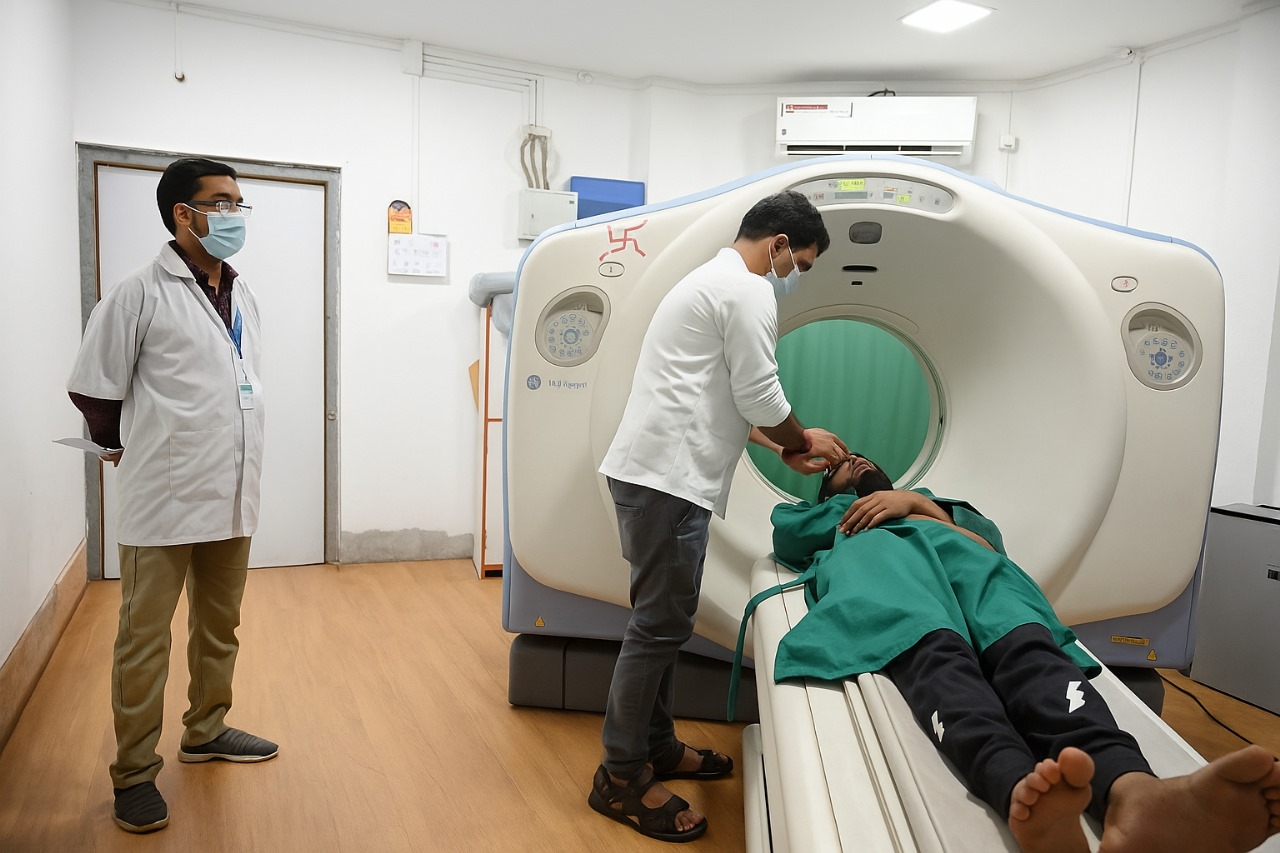
CT Scan (Computed Tomography)
A medical imaging procedure using X-rays penetrating through the body, reconstructed by computer acquisition to create detailed, cross-sectional images.
Professional Standards:
- CT scan done by senior radiographers
- Reports by experienced specialist doctors (Radiologists) only
- Modern technology with optimized radiation dose
How CT Scan Works
Advanced imaging technology for detailed diagnosis
X-Ray Penetration
X-rays penetrate through the body from multiple angles
Computer Acquisition
Computer acquires data and reconstructs images
Cross-Sectional Images
Detailed cross-sectional images are created for diagnosis
CT Scan Imaging Areas
Comprehensive imaging for all body parts
Brain CT Scan
Detailed imaging of brain structures and abnormalities
- Stroke detection (CVA)
- Head trauma evaluation
- Brain tumors
- Hemorrhage detection
Chest CT Scan
Comprehensive lung and thoracic imaging
- Lung disease evaluation
- Pulmonary embolism
- Chest trauma
- Mediastinal masses
Abdominal CT Scan
Complete abdominal organ assessment
- Liver and kidney imaging
- Pancreatic evaluation
- Bowel obstruction
- Abdominal trauma
Limbs & Joints
Detailed musculoskeletal imaging
- Fracture evaluation
- Joint assessment
- Bone tumors
- Soft tissue injuries
Neck CT Scan
Neck structures and lymph node evaluation
- Thyroid imaging
- Lymph node assessment
- Vascular evaluation
- Neck masses
Types of CT Scans
Different imaging protocols for comprehensive diagnosis
Plain CT Scan
Standard imaging without contrast material
- No IV injection needed
- Quick procedure
- Basic structural imaging
- Lower cost option
CECT (Contrast Enhanced CT)
Enhanced imaging with IV contrast for detailed blood vessels and tissue characterization
- Detailed blood vessel imaging
- Better tissue characterization
- Internal organ enhancement
- RFT parameters checked
Oral Contrast CT
Combined with oral contrast for gastrointestinal tract imaging
- GI tract visualization
- Bowel assessment
- Abdominal pathology detection
- Enhanced GI detail
Contrast Injection Information
Contrast-enhanced CT scans are minimally invasive. Contrast media is injected into the body through a vein after proper consent and evaluation of RFT parameters.
Note: There is a chance of allergic reaction in some patients. Please inform staff of any known allergies.
Radiation Safety & Quality Standards
Your safety is our priority with modern technology
Optimized Radiation Dose
Modern technology delivers appropriate, optimum dose with collimation to area of interest
Different Protocols
Separate protocols for adult and pediatric CT scans to deliver actual required dose
Pregnancy Precautions
CT scan avoided in pregnancy, especially early stage, with fetal safeguard options when necessary
Contrast Safety
Proper consent and RFT evaluation before contrast injection, with allergy monitoring
Senior Radiographers
CT scans performed by experienced senior radiographers
Specialist Reporting
Reports done by experienced specialist doctors (Radiologists) only
Pregnancy Precautions
CT scan is avoided in pregnancy mothers, especially in the early stage. The ionizing radiation can potentially harm fetal development.
When it is absolutely necessary to perform a CT scan on pregnant women (except the pelvic area), there are special protocols to safeguard the fetus in the mother's womb. Always inform staff if you are or might be pregnant.
Medical Emergency Applications
CT scan is preferred in emergency cases for rapid diagnosis
Your CT Scan Journey
Professional care at every step
Registration
Patient registration and consent
Preparation
RFT check (for contrast), IV line if needed
Scanning
CT scan by senior radiographer
Reporting
Specialist radiologist review and report
Frequently Asked Questions
Need a CT Scan?
Book your appointment for detailed cross-sectional imaging by senior radiographers with specialist radiologist reporting