
ECG (Electrocardiogram)
An ECG is a non-invasive test that records the electrical activity of the heart over time using electrodes placed on the skin. It helps diagnose cardiac rhythm disorders, ischemia, electrolyte imbalance, and structural heart problems.
How It Works:
- The heart's activity produces electrical impulses, which can be measured on the body surface
- These signals are represented as waves and intervals on graph paper or a monitor
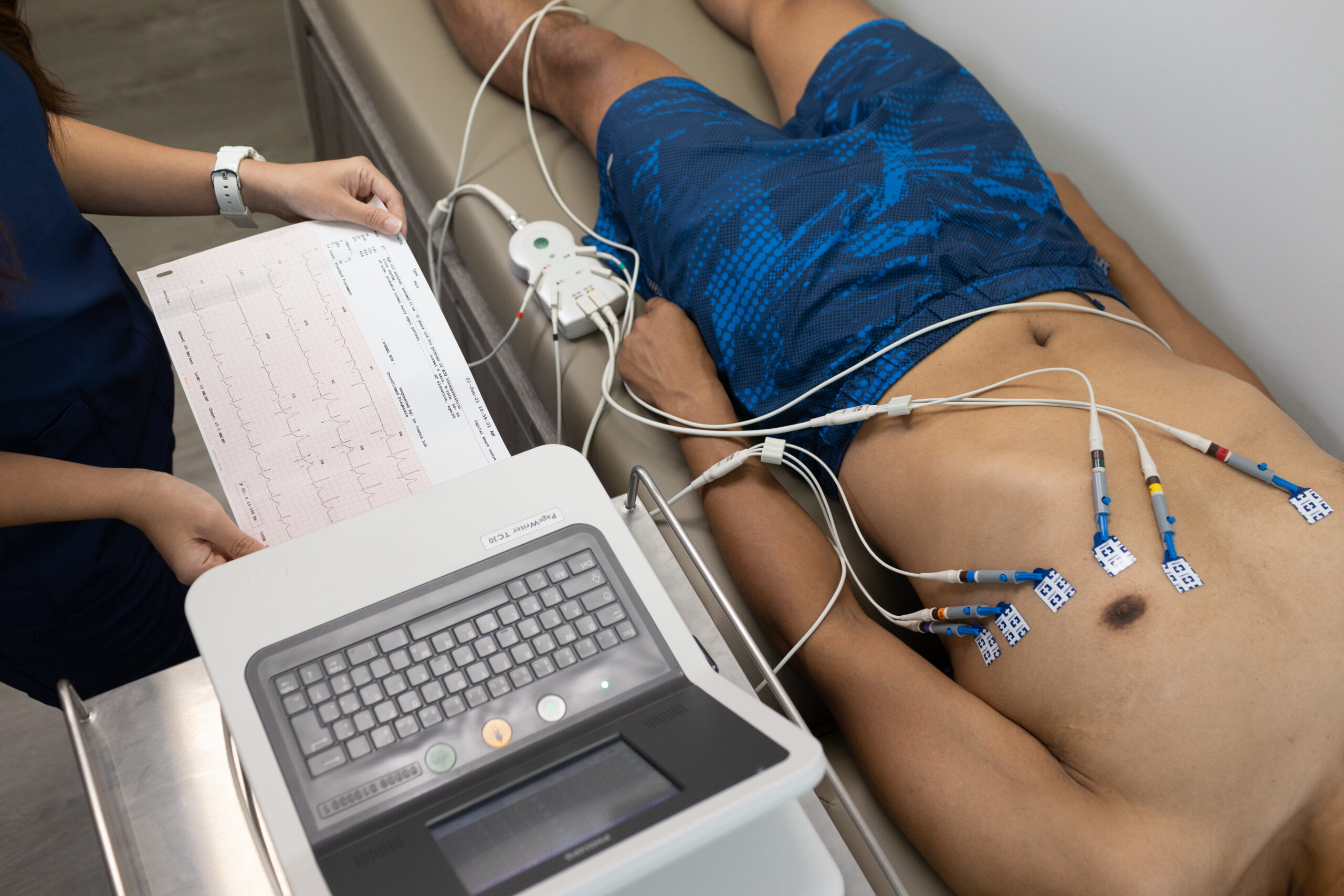
How ECG Works
Recording the heart's electrical activity
Electrical Impulses
The heart's activity produces electrical impulses, which can be measured on the body surface
Electrodes Placement
Electrodes placed on the skin detect and record these electrical signals
Wave Representation
These signals are represented as waves and intervals on graph paper or a monitor
Uses of ECG
Comprehensive cardiac assessment for various conditions
Detect Arrhythmias
Identify irregular heart rhythms and cardiac rhythm disorders
- Atrial fibrillation
- Ventricular tachycardia
- Bradycardia
- Heart blocks
Diagnose Heart Attack
Identify myocardial infarction and ischemia
- ST segment changes
- Myocardial ischemia
- Acute MI detection
- Coronary artery disease
Evaluate Pacemaker Function
Assess performance of implanted cardiac devices
- Pacemaker capture
- Device malfunction
- Lead placement
- Battery function
Assess Electrolyte Imbalances
Detect abnormalities in blood electrolyte levels
- Potassium abnormalities
- Calcium imbalance
- Sodium disorders
- Magnesium levels
Pre-op Cardiac Assessment
Pre-operative evaluation of cardiac function and risk
- Surgical clearance
- Baseline assessment
- Risk stratification
- Anesthesia planning
Advantages of ECG Testing
Safe, quick, and effective cardiac assessment
Non-Invasive Test
Completely painless procedure with no needles or incisions
Quick Results
Takes only a few minutes to perform with immediate results
No Radiation
Safe test with no radiation exposure
No Preparation Needed
No fasting or special preparation required
Widely Available
Standard test available in most medical facilities
Cost-Effective
Affordable diagnostic tool for cardiac evaluation
Cardiac Conditions Detected by ECG
Wide range of heart conditions identified
Your ECG Test Journey
Quick and painless procedure
Preparation
Patient positioned and skin prepared
Electrode Placement
Sticky electrodes attached to chest and limbs
Recording
ECG machine records electrical activity
Interpretation
Physician analyzes the ECG tracing
Frequently Asked Questions
Book Your ECG Test Today
Quick, painless, and non-invasive cardiac assessment with immediate results