
PFT (Pulmonary Function Test)
PFT stands for Pulmonary Function Test, a group of non-invasive tests that measure how well your lungs are working. It assesses lung volume, capacity, flow rates, and gas exchange.
Purpose of PFT:
Helps diagnose and monitor:
- Asthma
- Chronic Obstructive Pulmonary Disease (COPD)
- Pulmonary fibrosis
- Restrictive lung diseases
- Pre-surgical lung assessment
- Occupational lung disease
Types of PFT Tests
Comprehensive pulmonary function assessment components
Spirometry
Measures how much air you breathe in and out, and how fast
Lung Volumes
Measures total lung capacity and residual volume
Diffusion Capacity
Tests oxygen and carbon dioxide gas exchange
Exercise Testing
Measures lung function during physical exertion
What PFT Measures
Comprehensive lung function parameters
Lung Volume
Total capacity and air remaining after exhale
Flow Rates
Speed of air moving in and out of lungs
Gas Exchange
Oxygen and carbon dioxide transfer efficiency
Airway Function
How well airways open and close
Helps Diagnose & Monitor
Comprehensive respiratory condition assessment
Asthma
Diagnose and monitor airway obstruction
- Airway reversibility testing
- Bronchospasm detection
- Treatment response
- Disease severity assessment
COPD
Chronic Obstructive Pulmonary Disease monitoring
- Airway obstruction severity
- Disease progression tracking
- Exacerbation monitoring
- Treatment evaluation
Pulmonary Fibrosis
Detect and monitor lung scarring
- Restrictive pattern detection
- Gas exchange assessment
- Disease progression
- Treatment response
Restrictive Diseases
Diagnose reduced lung capacity conditions
- Interstitial lung disease
- Neuromuscular disorders
- Chest wall diseases
- Capacity reduction
Advantages of PFT Testing
Comprehensive and reliable respiratory assessment
Non-Invasive
No needles, surgery, or catheterization
Painless
Completely comfortable procedure
Quick Assessment
Takes 15-45 minutes depending on tests
Comprehensive Data
Complete lung function evaluation
Safe & Reliable
Well-established diagnostic standard
Outpatient Service
No hospitalization required
Conditions Diagnosed
Wide range of respiratory conditions
How to Prepare for PFT
Important guidelines for accurate results
During the Test
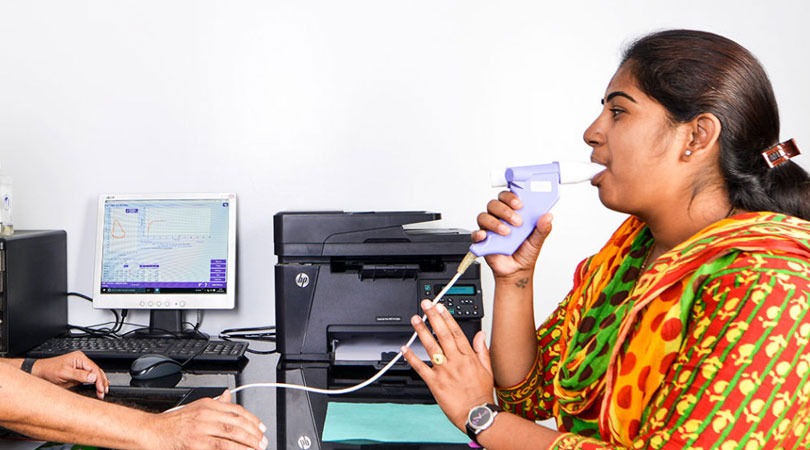
You will be asked to take deep breaths and blow out as hard and as fast as possible into the mouthpiece. Maximum effort is required for accurate results. Don't hesitate to ask for breaks if you feel tired or dizzy.
Your PFT Test Journey
Step-by-step pulmonary function testing
Preparation
Nose clip applied, mouthpiece position
Baseline Tests
Normal breathing pattern recorded
Forced Breathing
Deep breaths and forceful exhales
Analysis & Report
Results interpreted by pulmonologist
Frequently Asked Questions
Book Your PFT Test Today
Comprehensive pulmonary function assessment for optimal respiratory health